
Three weeks before a wedding, almost everybody does the same thing. They panic, and then they shop.
A new acid. A strong peel. A facial with a clinic they have never visited, booked for the Thursday before. A sheet mask every night because surely more is better. A tanning session, for the colour.
I understand the impulse entirely and I would like to talk you out of most of it.
The rule that matters more than any product
Nothing new in the last three weeks.
That is the whole of the advice and everything else is detail. Skin does not reward novelty under deadline. Every new active ingredient carries a small chance of irritation, and a small chance is a perfectly acceptable risk in February and a terrible one eleven days out.
Purging from a new retinoid takes four to six weeks to settle. A reaction to a new fragrance can take three days to appear and ten to calm. A peel that goes slightly too deep leaves texture that makeup sits in rather than over. None of these are disasters in ordinary life. All of them are, on a day with a photographer.
Three weeks out, your job is not improvement. It is protection of the thing you already have.
What the last three weeks are actually for
Consistency. Whatever you have been doing that has been working, do exactly that, every single day, without variation. Boring is the strategy.
Hydration, in the dull sense. Water, sleep, and not drinking very much alcohol in the final week. Skin responds to those three faster and more visibly than to almost anything you can apply. A week of six hours a night shows up around the eyes no matter what is in the bottle.
Barrier, not actives. Shift the balance towards things that soothe and seal. Rosehip oil at night is a good anchor here — it is well tolerated, it supports texture and tone over time, and it is not doing anything dramatic enough to go wrong. Silky velvet cream over it if your skin is dry or the weather is cold.
Calm, for reactive skin. If stress makes you flush or break out — and wedding planning is a reliable stressor — aqua calm rosewater mist is the low-risk option. Water-based, soothing, and you can use it over makeup on the day itself without disturbing anything.
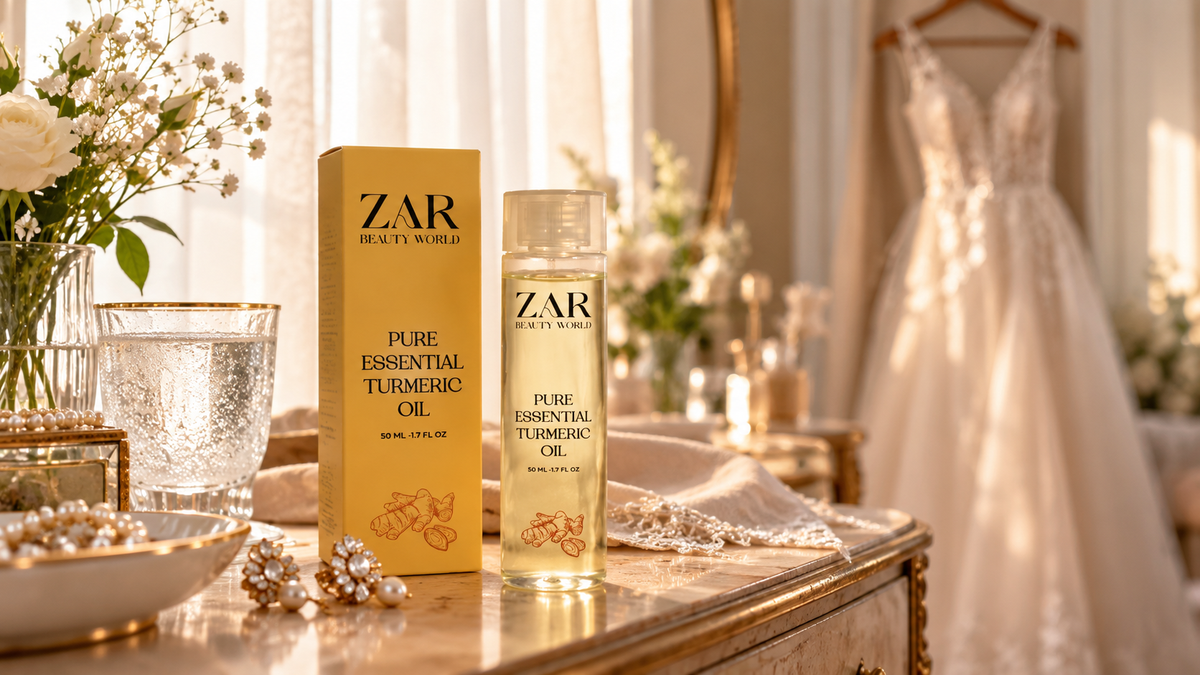
Turmeric, if you started early enough. Turmeric oil has a long traditional place in South Asian and Middle Eastern bridal preparation, and there is good reason for that — it is soothing and it is well suited to uneven tone. One caution that matters enormously here: turmeric can stain, particularly on fair skin and particularly on fabric. Use it at night, use it sparingly, and do not use it for the first time in the final fortnight.
A realistic twelve-week timeline
If you are reading this early — genuinely the best position to be in — here is the shape of it.
- Twelve to eight weeks out. This is the only window for experiments. New actives, a course of professional facials, anything you have been curious about. Introduce one thing at a time, two weeks apart, so you know what caused what.
- Eight to four weeks out. Keep what worked, drop what did not. Settle into the final routine. Last professional facial no later than three weeks before — two is cutting it fine, one is a gamble.
- Four to one week out. Nothing new. Nothing stronger. Nothing you have not used at least six times. Sleep becomes the active ingredient.
- The final week. Gentle cleansing, oil, cream, mist, water, sleep. Resist absolutely everything else. No extractions, no threading you have not had before, no first-time waxing.
- The night before. Your normal routine, slightly more generously applied. Then stop. Go to bed early. This is not the night for a mask you were given at a hen party.
Two things people forget
Your body is in the photographs too. Shoulders, arms, back, décolleté, hands, and feet, if the dress allows. These get neglected for eleven months and then noticed in the mirror four days out. Body oil after every shower from eight weeks out — almond is the easy choice, light, unobtrusive, absorbs properly. Hands and elbows twice daily, because they are the driest skin you own and the most photographed after your face.
Your scent will be the strongest memory anyone keeps. This is not a sales line; it is how memory works. Olfactory memory is unusually durable and unusually emotional, and the fragrance you wear on that day will reliably return you to it for decades.
Which argues for choosing it deliberately and early. Wear it a few times beforehand — partly to be certain of it, partly so that it is already yours when the day arrives. Our extrait de parfum concentration means less application and longer wear, which matters across a fourteen-hour day. Blossom Dew for spring weddings; Whisper Amber for autumn and winter.
Apply it last, after dressing, never onto the dress itself — oils and fine fabric are not friends. Base of the throat, behind the ears, inner elbows. Then leave it alone.
The thing nobody will tell you
Your skin on the day will be slightly worse than its best and slightly better than you fear, because you will have slept badly and been hugged by ninety people and cried at least once.
And it will not matter in the slightest. Nobody at a wedding looks at skin. They look at faces, and faces on that particular day are doing something that no product has ever been able to replicate.
Prepare properly so you can stop thinking about it. That is the actual goal.
Browse face oils, water-based serums and extrait de parfum. Planning early? A discovery kit is the safest way to test before you commit.